26 Clean Architecture
26.1 Core Concept: Dependency Inversion
Clean Architecture is fundamentally about reversing the traditional dependency direction. Instead of business logic depending on infrastructure, infrastructure depends on business logic.
26.1.1 Traditional Architecture (❌ Problems)
┌─────────────────────────────────────┐
│  User Interface                     │
└──────────────┬──────────────────────┘
               │ depends on
               ▼
┌─────────────────────────────────────┐
│  Business Logic                     │
│  • Calls database directly          │
│  • Depends on specific DB (SQL)     │
│  • Tightly coupled to infrastructure│
└──────────────┬──────────────────────┘
               │ depends on
               ▼
┌─────────────────────────────────────┐
│  Data Access / Infrastructure       │
│  • SQL Server specific code         │
│  • File system operations           │
│  • External API calls               │
└─────────────────────────────────────┘

Problem: Business logic knows about database!
Can't test without database
Can't swap databases easily
26.1.2 Clean Architecture (✅ Solution)
┌─────────────────────────────────────┐
│  User Interface                     │
└──────────────┬──────────────────────┘
               │ depends on
               ▼
┌─────────────────────────────────────┐
│  Application Core (Business Logic)  │
│  • Defines INTERFACES               │
│  • Contains domain models           │
│  • Pure business rules              │
│  • NO infrastructure knowledge      │
└──────────────┬──────────────────────┘
               │ defines interfaces
               ▼
┌─────────────────────────────────────┐
│  Infrastructure                     │
│  • IMPLEMENTS those interfaces      │
│  • SQL/PostgreSQL/MongoDB           │
│  • File system                      │
│  • External APIs                    │
└─────────────────────────────────────┘
         ▲
         │ implements interfaces from
         └─ Dependency points INWARD!

Benefit: Business logic is independent!
Easy to test (mock interfaces)
Easy to swap implementations
26.2 The Onion Architecture View
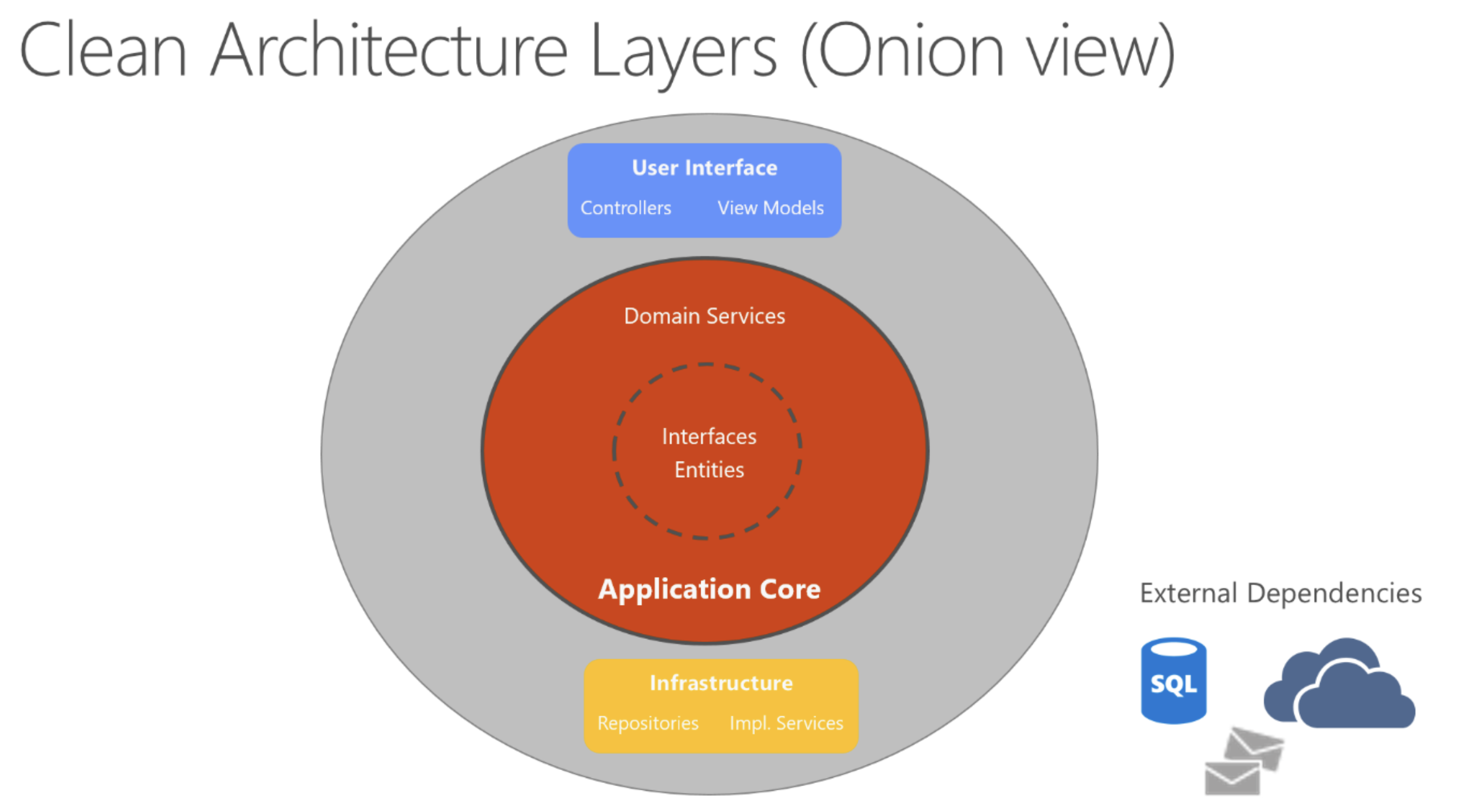
From your first image, let’s break down each layer:
        ┌─────────────────────────────────────────┐
        │         OUTER LAYER (Gray)              │
        │                                         │
        │  ┌─────────────────────────┐            │
        │  │   User Interface        │            │
        │  │   • Controllers         │            │
        │  │   • View Models         │            │
        │  │   • API Endpoints       │            │
        │  └──────────┬──────────────┘            │
        │             │                           │
        │             │ uses                      │
        │             ▼                           │
        │  ┌──────────────────────────────┐       │
        │  │   MIDDLE LAYER (Orange)      │       │
        │  │   Application Core           │       │
        │  │                              │       │
        │  │   Domain Services            │       │
        │  │   Business Rules             │       │
        │  │                              │       │
        │  │   ┌────────────────────┐     │       │
        │  │   │  INNER CORE        │     │       │
        │  │   │  • Entities        │     │       │
        │  │   │  • Interfaces      │     │       │
        │  │   └────────────────────┘     │       │
        │  └──────────────────────────────┘       │
        │             ▲                           │
        │             │ implements                │
        │  ┌──────────┴──────────────┐            │
        │  │   Infrastructure        │            │
        │  │   • Repositories        │            │
        │  │   • Impl. Services      │            │
        │  └─────────────────────────┘            │
        │                                         │
        └─────────────────────────────────────────┘
                      ▲
                      │ connects to
        ┌─────────────┴────────────────┐
        │  External Dependencies       │
        │  • SQL Database              │
        │  • Cloud Storage             │
        │  • Email Service             │
        └──────────────────────────────┘

Key Rule: Dependencies flow INWARD →
Inner layers know nothing about outer layers
26.3 The Three Core Layers
26.3.1 Layer 1: Application Core (The Heart) 🧡
What it contains:
Application Core/
├── Entities/
│   ├── Patient.py
│   ├── CTScan.py
│   └── StrokeResult.py
├── Interfaces/
│   ├── IDicomRepository.py
│   ├── IStrokeDetector.py
│   └── INotificationService.py
└── Services/
    ├── AspectsCalculator.py
    └── ClinicalRecommendation.py
Characteristics:
- NO dependencies on external libraries (except maybe core Python)
- NO knowledge of databases, APIs, UI frameworks
- Contains pure business logic
- Defines interfaces (contracts) for what it needs
Example - Patient Entity:
# entities/patient.py
from dataclasses import dataclass
from datetime import datetime

@dataclass
class Patient:
    """Pure domain entity - no database, no infrastructure"""
    patient_id: str
    name: str
    date_of_birth: datetime
    hn: str  # Hospital Number

    def get_age(self) -> int:
        """Pure business logic"""
        today = datetime.now()
        return today.year - self.date_of_birth.year
Example - Interface Definition:
# interfaces/idicom_repository.py
from abc import ABC, abstractmethod
from entities.ct_scan import CTScan

class IDicomRepository(ABC):
    """Interface defined in Application Core"""

    @abstractmethod
    def get_scan_by_id(self, scan_id: str) -> CTScan:
        """Get CT scan - HOW is not specified here!"""
        pass

    @abstractmethod
    def save_scan(self, scan: CTScan) -> None:
        """Save CT scan - Could be SQL, MongoDB, file system!"""
        pass
The core doesn’t care HOW, just WHAT!
26.3.2 Layer 2: Infrastructure (The Implementation) 🟡
What it contains:
Infrastructure/
├── Repositories/
│   ├── SqlDicomRepository.py      ← Implements IDicomRepository
│   ├── PacsDicomRepository.py     ← Also implements IDicomRepository
│   └── FileDicomRepository.py     ← Another implementation!
├── Services/
│   ├── EmailNotificationService.py ← Implements INotificationService
│   └── SmsNotificationService.py   ← Alternative implementation
└── ExternalApis/
    └── PacsConnector.py
Characteristics: - Implements interfaces from Application Core - Contains all infrastructure code: databases, files, APIs, etc. - Depends on Application Core - Can be swapped without changing business logic
Example - SQL Implementation:
# infrastructure/repositories/sql_dicom_repository.py
from sqlalchemy.orm import Session
from interfaces.idicom_repository import IDicomRepository  # ← From Core!
from entities.ct_scan import CTScan  # ← From Core!

class SqlDicomRepository(IDicomRepository):
    """SQL implementation of the interface"""

    def __init__(self, db_session: Session):
        self.db = db_session

    def get_scan_by_id(self, scan_id: str) -> CTScan:
        """Implementation uses SQL"""
        result = self.db.query(CTScanModel).filter_by(id=scan_id).first()
        return self._map_to_entity(result)

    def save_scan(self, scan: CTScan) -> None:
        """Implementation uses SQL"""
        model = self._map_to_model(scan)
        self.db.add(model)
        self.db.commit()
Example - PACS Implementation:
# infrastructure/repositories/pacs_dicom_repository.py
from pynetdicom import AE
from interfaces.idicom_repository import IDicomRepository  # ← Same interface!
from entities.ct_scan import CTScan

class PacsDicomRepository(IDicomRepository):
    """PACS implementation of the SAME interface"""

    def __init__(self, pacs_host: str, pacs_port: int):
        self.ae = AE()
        self.host = pacs_host
        self.port = pacs_port

    def get_scan_by_id(self, scan_id: str) -> CTScan:
        """Implementation uses DICOM network protocol"""
        # Query PACS using DIMSE
        dataset = self._query_pacs(scan_id)
        return self._convert_to_entity(dataset)

    def save_scan(self, scan: CTScan) -> None:
        """Implementation sends to PACS"""
        dataset = self._convert_to_dicom(scan)
        self._store_to_pacs(dataset)
Same interface, completely different implementation!
26.3.3 Layer 3: User Interface (The Presentation) 🔵
What it contains:
UserInterface/
├── Api/
│   ├── Controllers/
│   │   ├── StrokeDetectionController.py
│   │   └── PatientController.py
│   └── ViewModels/
│       ├── StrokeResultViewModel.py
│       └── PatientViewModel.py
└── Web/
    ├── templates/
    └── static/
Characteristics: - Handles user interaction (HTTP requests, CLI, GUI) - Depends on Application Core - Converts between user format and domain format - NO business logic here!
Example - API Controller:
# api/controllers/stroke_detection_controller.py
from fastapi import APIRouter, Depends
from interfaces.idicom_repository import IDicomRepository
from services.aspects_calculator import AspectsCalculator

router = APIRouter()

@router.post("/detect-stroke")
def detect_stroke(
    study_id: str,
    # Dependency injection - we don't care which implementation!
    dicom_repo: IDicomRepository = Depends(get_dicom_repository)
):
    """UI layer - just coordinates, no business logic"""

    # Get data using interface
    ct_scan = dicom_repo.get_scan_by_id(study_id)

    # Use business logic from Application Core
    calculator = AspectsCalculator()
    aspects_score = calculator.calculate(ct_scan)

    # Return as JSON (UI concern)
    return {
        "study_id": study_id,
        "aspects_score": aspects_score,
        "status": "completed"
    }
26.4 Dependency Flow Visualization
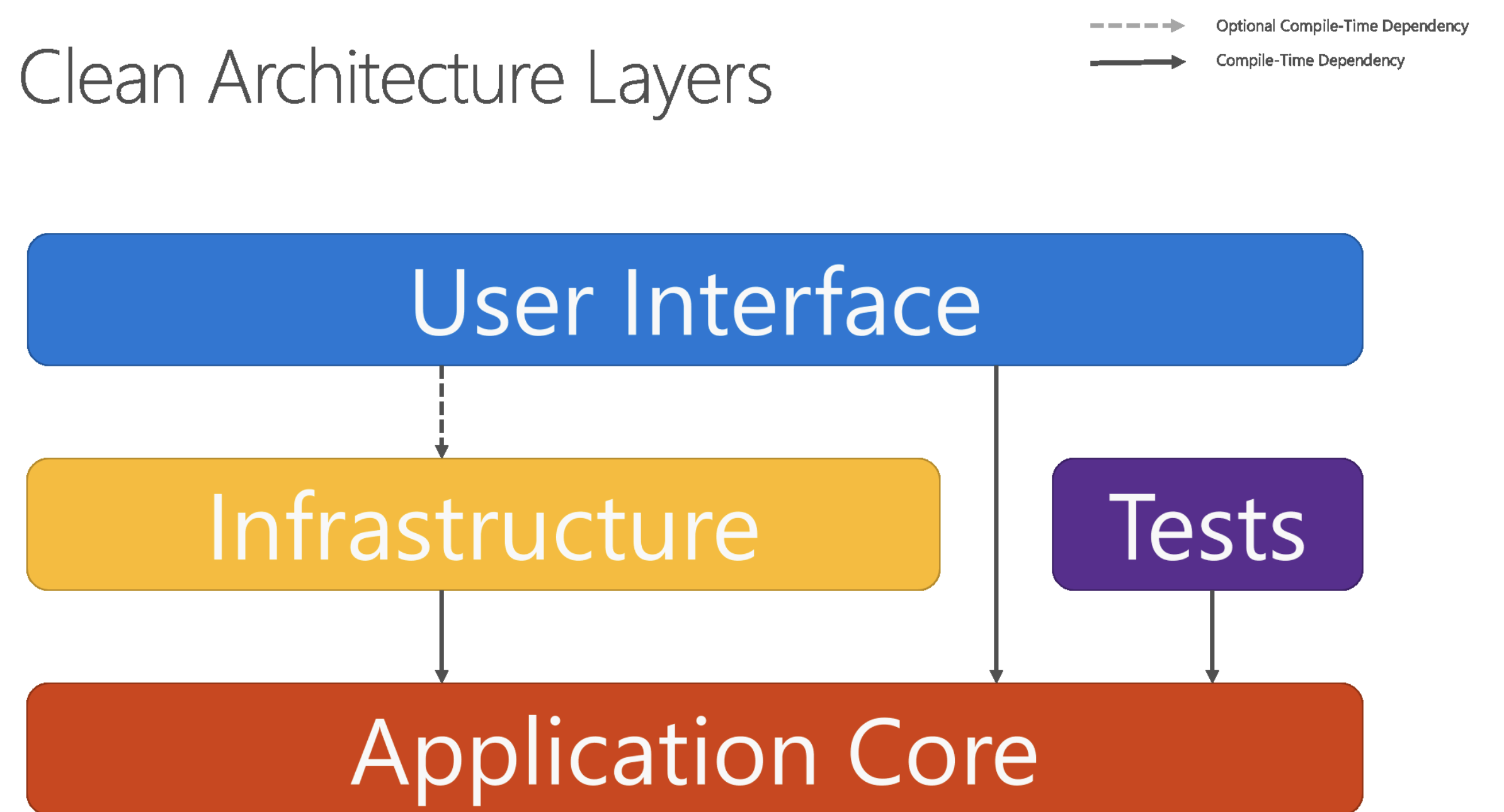
From your second image, here’s the dependency direction:
┌───────────────────────────────────────────────┐
│           User Interface (Blue)               │
│  • FastAPI routes                             │
│  • React frontend                             │
└──────────────────┬────────────────────────────┘
                   │
                   │ Solid arrow = Compile-time dependency
                   ▼
┌──────────────────────────────────────────┐
│      Application Core (Red)              │
│  • Business Logic                        │
│  • Entities                              │
│  • Interfaces (contracts)                │
└──────────────────────────────────────────┘
                   ▲                 ▲
                   │                 │
         ┌─────────┴──────┐   ┌──────┴────────┐
         │                │   │               │
         │ Implements     │   │ Uses (test)   │
         │                │   │               │
┌────────┴────────┐    ┌──┴───┴──────┐
│ Infrastructure  │    │    Tests    │
│ (Yellow)        │    │  (Purple)   │
└─────────────────┘    └─────────────┘

Key insight: Infrastructure knows about Core
            Core doesn't know about Infrastructure!
26.5 Real-World Radiology AI Example
26.5.1 Scenario: CT Stroke Detection System
Application Core (Business Logic):
# core/entities/ct_scan.py
@dataclass
class CTScan:
    scan_id: str
    patient_id: str
    acquisition_date: datetime
    modality: str
    image_data: np.ndarray  # Pure data, no storage concern

# core/interfaces/iscan_repository.py
class IScanRepository(ABC):
    @abstractmethod
    def get_scan(self, scan_id: str) -> CTScan:
        pass

# core/services/stroke_detector.py
class StrokeDetector:
    """Pure business logic - no infrastructure!"""

    def __init__(self, model_path: str):
        self.model = self._load_model(model_path)

    def calculate_aspects(self, scan: CTScan) -> int:
        """Business rule: ASPECTS scoring"""
        predictions = self.model.predict(scan.image_data)
        score = self._calculate_score(predictions)
        return score

    def generate_recommendation(self, aspects_score: int) -> str:
        """Business rule: Clinical recommendation"""
        if aspects_score >= 8:
            return "Consider thrombolysis if within window"
        elif aspects_score >= 6:
            return "Consult stroke team for case discussion"
        else:
            return "Large infarct - thrombolysis not recommended"
Infrastructure (Multiple Implementations):
# infrastructure/repositories/pacs_repository.py
class PacsRepository(IScanRepository):
    """Production: Get from hospital PACS"""
    def get_scan(self, scan_id: str) -> CTScan:
        # Complex DICOM network code
        pass

# infrastructure/repositories/file_repository.py
class FileRepository(IScanRepository):
    """Development: Get from local files"""
    def get_scan(self, scan_id: str) -> CTScan:
        # Simple file reading
        pass

# infrastructure/repositories/mock_repository.py
class MockRepository(IScanRepository):
    """Testing: Return fake data"""
    def get_scan(self, scan_id: str) -> CTScan:
        return CTScan(
            scan_id="TEST001",
            patient_id="P001",
            acquisition_date=datetime.now(),
            modality="CT",
            image_data=np.zeros((512, 512))  # Fake image
        )
User Interface (API):
# api/main.py
from fastapi import FastAPI, Depends

app = FastAPI()

def get_repository() -> IScanRepository:
    """Dependency injection - choose implementation"""
    if settings.ENV == "production":
        return PacsRepository()
    elif settings.ENV == "development":
        return FileRepository()
    else:
        return MockRepository()

@app.post("/analyze")
def analyze_stroke(
    scan_id: str,
    repo: IScanRepository = Depends(get_repository)
):
    # Get scan (don't care from where!)
    scan = repo.get_scan(scan_id)

    # Run business logic
    detector = StrokeDetector(model_path="model.h5")
    aspects_score = detector.calculate_aspects(scan)
    recommendation = detector.generate_recommendation(aspects_score)

    return {
        "aspects_score": aspects_score,
        "recommendation": recommendation
    }
26.6 Benefits of Clean Architecture
26.6.1 1. Easy Testing
# tests/test_stroke_detector.py
def test_aspects_calculation():
    # Use mock repository - no real PACS needed!
    mock_repo = MockRepository()
    scan = mock_repo.get_scan("TEST001")

    detector = StrokeDetector(model_path="test_model.h5")
    score = detector.calculate_aspects(scan)

    assert score >= 0 and score <= 10
No database, no PACS, no network - just pure logic testing!
26.6.2 2. Easy Swapping
# Swap from PACS to cloud storage:

# Before:
repository = PacsRepository(host="pacs.hospital.local")

# After (just change ONE line):
repository = CloudRepository(bucket="ct-scans-asia")

# Business logic stays EXACTLY the same!
detector = StrokeDetector(model_path="model.h5")
scan = repository.get_scan(scan_id)  # ← Same interface
result = detector.calculate_aspects(scan)  # ← Same logic
26.6.3 3. Independent Development
Team 1: Application Core          Team 2: Infrastructure
┌─────────────────────┐          ┌──────────────────────┐
│ Define interfaces   │  ──────> │ Implement interfaces │
│ Write business      │          │ Build PACS connector │
│ logic               │          │ Set up database      │
│                     │          │                      │
│ Can work with       │          │ Can work separately  │
│ mock data           │          │ as long as interface │
│                     │          │ is followed          │
└─────────────────────┘          └──────────────────────┘

Both teams work independently!
Integration is just wiring up interfaces
26.6.4 4. Framework Independence
Your Application Core doesn’t depend on: - FastAPI - SQLAlchemy
- pydicom - Any external library!
Today:  FastAPI + PostgreSQL + PACS
Tomorrow: Django + MongoDB + Cloud Storage
Next year: GraphQL + DynamoDB + S3

Application Core stays the same! ✨
26.7 Project Structure Example
ct-stroke-ai/
├── core/                          ← Application Core
│   ├── entities/
│   │   ├── patient.py
│   │   ├── ct_scan.py
│   │   └── stroke_result.py
│   ├── interfaces/
│   │   ├── iscan_repository.py
│   │   ├── imodel_service.py
│   │   └── inotification_service.py
│   └── services/
│       ├── stroke_detector.py
│       ├── aspects_calculator.py
│       └── clinical_advisor.py
│
├── infrastructure/                ← Infrastructure
│   ├── repositories/
│   │   ├── pacs_repository.py
│   │   ├── sql_repository.py
│   │   └── file_repository.py
│   ├── services/
│   │   ├── tensorflow_model_service.py
│   │   └── email_notification_service.py
│   └── database/
│       └── postgres_context.py
│
├── api/                           ← User Interface
│   ├── controllers/
│   │   └── stroke_controller.py
│   ├── viewmodels/
│   │   └── stroke_result_vm.py
│   └── main.py
│
└── tests/                         ← Tests
    ├── unit/
    │   └── test_stroke_detector.py
    └── integration/
        └── test_api.py
26.8 Key Principles Summary
26.8.1 1. Dependency Inversion Principle
❌ WRONG:
Core → depends on → Infrastructure

✅ RIGHT:
Core ← depended on by ← Infrastructure
26.8.2 2. Interface Segregation
Core defines interfaces:
interface IScanRepository {
    get_scan()
    save_scan()
}

Infrastructure implements:
class PacsRepository implements IScanRepository
class FileRepository implements IScanRepository
class CloudRepository implements IScanRepository
26.8.3 3. Single Responsibility
✅ Application Core: Business rules ONLY
✅ Infrastructure: Technical implementation ONLY
✅ UI: User interaction ONLY
26.9 When to Use Clean Architecture?
✅ Use when:
- Complex business logic
- Long-term project (years)
- Multiple developers/teams
- Need flexibility to change tech stack
- High testability requirements
- Your radiology AI systems! 🏥
❌ Overkill for:
- Simple CRUD apps
- Prototypes
- Short-lived projects
- Solo weekend projects
26.10 Summary
Clean Architecture = Onion Architecture = Hexagonal Architecture
Core idea: Business logic at the center, everything else depends on it.
┌─────────────────────────────────────┐
│  The Dependency Rule:               │
│                                     │
│  Source code dependencies           │
│  point INWARD only                  │
│                                     │
│  Outer circles → Inner circles ✅   │
│  Inner circles → Outer circles ❌   │
└─────────────────────────────────────┘
Result:
- Testable business logic
- Flexible infrastructure
- Independent of frameworks
- Independent of databases
- Independent of UI